Vehicle wraps in Phoenix that survive the summer. Full, partial and spot wraps for work trucks, vans, cars and fleets, in cast vinyl with a UV laminate. You see the wrap laid out on your exact vehicle before a single panel prints.
If you searched vehicle wraps Phoenix, truck wraps Phoenix or car wraps Phoenix AZ, this page explains what a wrap is made of, what we need from you, and what the Arizona sun does to the cheap version — before you ask for a quote.
Full, partial,
or just the doors.
A wrap is printed vinyl film applied over paint — not paint, not a decal sheet. How much of the vehicle it covers is the first decision, and it changes the price more than anything else you choose afterward.
Product · the film leaves its backing liner and lays down over the body panel — the curl at the peel line is real
Full wrap
Every painted panel is covered: hood, roof, doors, quarters, bumpers where the shape allows. A full vehicle wrap changes the colour of the vehicle outright and gives the design the whole body to work with. It is the choice when the vehicle is the sign — a delivery van, a mobile service truck, a food trailer that parks in traffic all day. It also protects the paint underneath, which matters at resale.
Partial wrap
Typically the rear half or the lower two-thirds, blended into the factory colour with a designed edge so it reads as intentional rather than unfinished. Most commercial wraps in Phoenix are partial wraps: the business name, the phone number and the service list sit on the sides and the tailgate, where people in the next lane actually look, and the white factory roof and hood stay white.
Spot graphics and lettering
Door logos, a phone number on the tailgate, a DOT number, a stripe. Printed-and-cut decals or cut vinyl lettering, applied to a clean panel. This is the fastest way to put a work truck into uniform, and it is where most fleets start before they commit to a wrap. If you want perforated rear-window film in the same job, see vehicle & window graphics — it is a different material on a different surface.
Fleet wraps
Two trucks or twenty: the design is built once as a template per make and model, so a Transit, a ProMaster and an F-150 all carry the same brand in the same proportions. Reorders reference the earlier job so the colour and layout match the vehicle already on the road.
Why cheap wraps
fail in Phoenix.
Two films look identical on the roll. One is cast, one is calendared. On a flat sign the difference is academic; on a truck door in July it is the whole job.
Cast vinyl is poured as a liquid and cured, so it has no built-in tension. It conforms to curves, rivets and recessed panels and stays put when the metal under it hits the surface temperature an Arizona summer produces. Calendared vinyl is rolled out under pressure and remembers it: heat makes it try to shrink back, which is what lifting edges, tented rivets and cracked corners on a two-year-old wrap look like. We spec cast film for vehicle wraps and use calendared film where it belongs — flat signs, short-term windows, temporary panels.
The laminate is not optional here. A clear UV overlaminate goes over the printed film before it touches the vehicle. It is what keeps the colour from chalking, what you wash and wax, and what takes the scratches from a car wash brush instead of the print. Matte, satin and gloss laminates change the look of the same print; gloss reads most like paint.
- Printed colour, not paint colour. Brand colours need Pantone or CMYK values up front; a colour matched on screen is not a colour matched on vinyl.
- Paint condition decides adhesion. Film sticks to clear coat, not to peeling paint, primer or fresh body filler. A repainted panel needs time to cure before it is wrapped.
- Removal is part of the design. A quality cast film comes off clean years later; the cheap version leaves adhesive on the paint and a bill from a detailer.
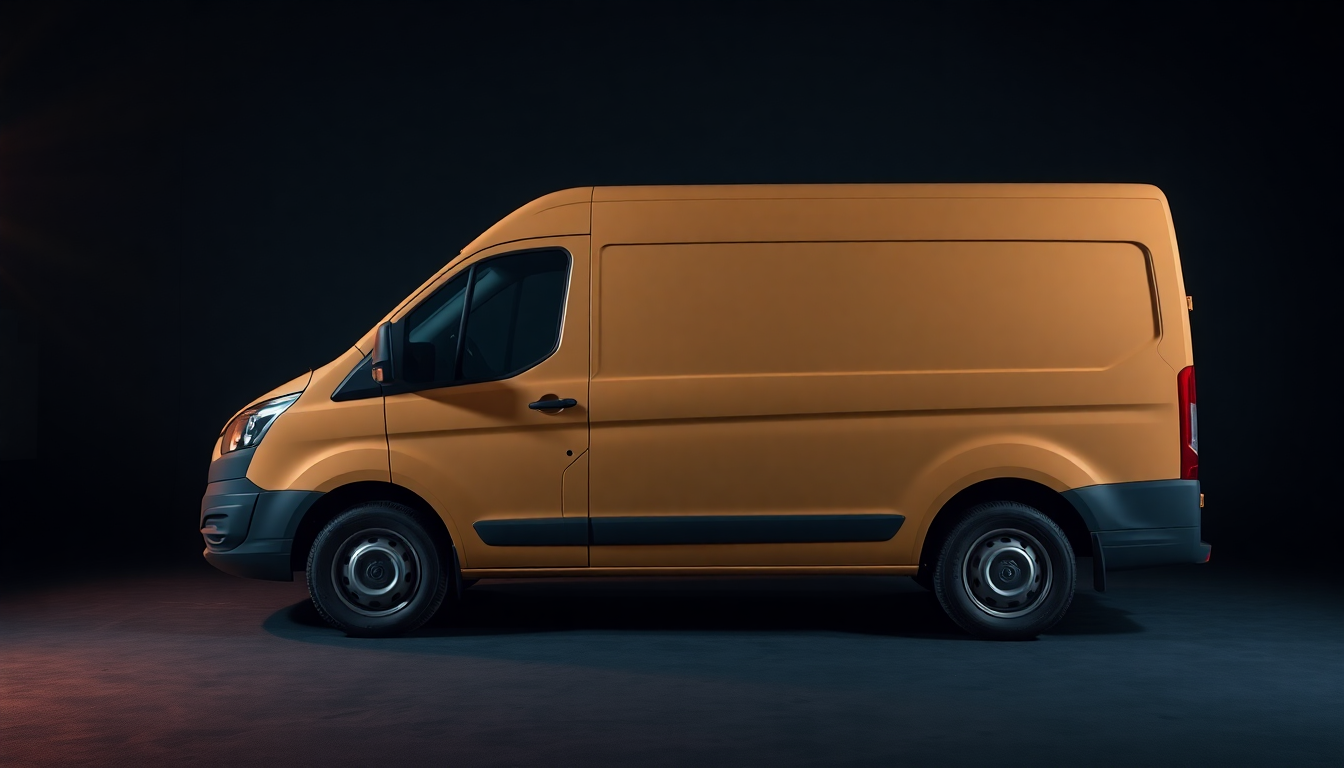

A logo, a vehicle,
and four photos.
Wraps are designed on a scale template of your exact make, model and year. The template is why the proof you approve is the truck you get.
Product · a printed-and-cut decal weeding off its sheet — spot graphics and door lettering are made this way
- Your logo as a vector file — PDF, AI, EPS or SVG. A JPG from your website will not hold up at door height. If vector is all you are missing, say so; simple marks can be redrawn.
- Make, model, year and trim — a short-wheelbase Transit and a long one are different templates; a crew cab and a regular cab are different doors.
- Photos of each side in flat light, plus the back, so the proof accounts for mirrors, handles, racks, ladder mounts and anything already on the vehicle.
- What has to be on it — name, phone, website, services, licence or DOT number — and the order of importance. A wrap read at 40 mph gets about three words.
From that we lay out the wrap on the template, send a proof of every side at scale, and hold production until you approve it in writing. Wording, phone numbers and colour values are checked on the proof, because what you approve is what prints. Full specs for file resolution and bleed are in the prep guide.
How a wrap job moves.
Quote. Tell us the vehicle, the coverage you have in mind and what you have for artwork through the quote form, or call (480) 975-1891. We answer with the coverage we recommend, the film and laminate, and a written quote for the job. Design. The layout goes onto your vehicle template and comes back as a proof of each side. Print and laminate. Once approved, the panels print on cast film and get their UV laminate. Fitting. The vehicle is fitted panel by panel, edges post-heated so the film holds its shape in the sun. Ask about fitting and scheduling when you request the quote; it is planned per job around the vehicle's size and condition.
Aftercare is simple: hand wash or touchless wash, no pressure washer at the edges, no wax on a matte laminate. A wrap that is washed like paint lasts like paint.
Wrap questions.
It depends on three things: how much of the vehicle is covered, the size and shape of the vehicle, and how much design work the artwork needs. A spot-graphics job on a work truck and a full wrap on a cargo van are different orders of magnitude. We quote each job in writing after seeing the vehicle and the artwork, and nothing prints until you approve the proof.
Longer than you would expect if it is cast vinyl under a UV laminate and the vehicle is washed sensibly, and much less if it is calendared film with no laminate. Horizontal surfaces (hood, roof) take the most sun and age first; a partial wrap that keeps them in factory paint avoids the problem entirely. Shade and a garage help as much as any material choice.
Not on sound factory paint with intact clear coat — the film protects it, and quality cast vinyl removes clean. It can pull a repaint, peeling clear coat or body filler that was not cured, which is why we ask for photos of each side and look at the paint before quoting.
Yes. Door logos, tailgate lettering and a phone number are printed-and-cut decals or cut vinyl, and they are the most common first order for a work truck. If you later want a partial or full wrap, the same artwork and template carry over.
Yes. The design is built as a template per make and model, so every vehicle carries the brand in the same proportions, and reorders reference the earlier job so a new truck matches the ones already on the road. Send the vehicle list with your quote request.
A wrap is a cosmetic film and does not change the vehicle's registration or require a permit in Arizona, but a colour change may need to be noted with your insurer, and commercial vehicles still need any required DOT or licence markings visible. We can include those markings in the layout.
Always. The design is laid out on a scale template of your exact make and model and sent back as a proof of each side. You approve it in writing, we print it, and the finished vehicle matches the proof.